


Leukaemia, lymphoma and multiple myeloma are all types of blood cancer, but they affect different cells and parts of the body. Understanding these differences can help you make sense of symptoms, diagnostic tests and why treatment varies between blood cancers.
What Is Blood Cancer?
Blood cancer affects cells involved in blood production or immune function. Many blood cells are produced in the bone marrow, the soft tissue inside certain bones.
Your blood contains:
- Red blood cells, which carry oxygen
- White blood cells, which help protect against infection
- Platelets, which help control bleeding
Blood cancer develops when certain blood-forming or immune cells become abnormal and grow or multiply in an uncontrolled way.
What Are the Main Types of Blood Cancer?
The three main groups discussed in this article are:
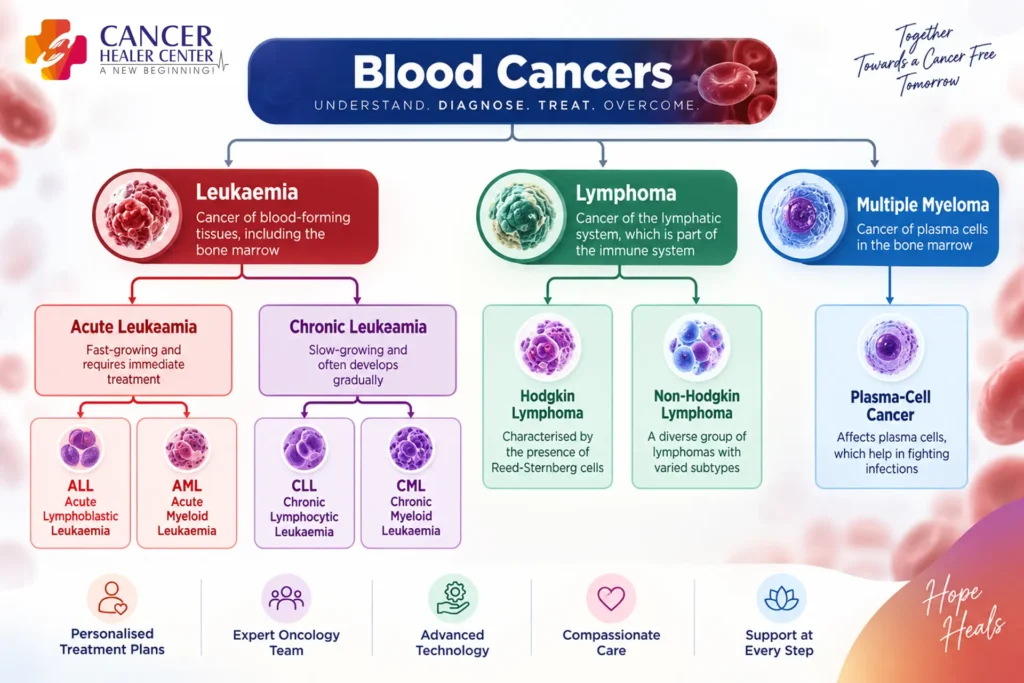
- Leukaemia, which usually affects blood-forming cells in the bone marrow and often the blood
- Lymphoma, which begins in lymphocytes, a type of white blood cell, and commonly affects the lymphatic system
- Multiple myeloma, which develops from plasma cells in the bone marrow
Although all three are blood cancers, they affect different cells and can require different tests and treatments.
What Is Leukaemia?
Leukaemia is a broad term for cancers affecting blood-forming cells, usually beginning in the bone marrow.
In many types of leukaemia, abnormal cells build up in the bone marrow and blood. This can interfere with the production or function of healthy blood cells.
Possible symptoms include:
- Unusual tiredness or weakness
- Pale skin or breathlessness
- Frequent or persistent infections
- Unexplained fever
- Easy bruising or bleeding
- Tiny red or purple spots under the skin
- Bone or joint discomfort
These symptoms can have many non-cancerous causes and do not by themselves mean that you have leukaemia.
What are the main types of leukaemia?
Leukaemias are commonly classified by how quickly they develop and which blood-forming cells are affected.
The main types include acute lymphoblastic leukaemia (ALL), acute myeloid leukaemia (AML), chronic lymphocytic leukaemia (CLL) and chronic myeloid leukaemia (CML).
Acute leukaemias generally progress more quickly and require prompt specialist assessment. Chronic leukaemias often develop more slowly, and some are discovered through routine blood tests.
What Is Lymphoma?
Lymphoma is cancer that begins in lymphocytes, specialised white blood cells involved in immune function.
Lymphocytes are found throughout the lymphatic system, including the lymph nodes, spleen, bone marrow and other lymphatic tissues.
A possible sign is a persistent, usually painless swollen lymph node, often in the neck, armpit or groin.
Other possible symptoms include:
- Unexplained fever
- Drenching night sweats
- Unexplained weight loss
- Persistent tiredness
- Itchy skin
- Symptoms caused by enlarged lymph nodes or affected organs
Swollen lymph nodes are common with infections and usually do not mean lymphoma. However, persistent or unexplained swelling should be medically assessed.
Lymphoma is broadly divided into Hodgkin lymphoma and non-Hodgkin lymphoma. Within these groups are different subtypes that can behave differently, so identifying the exact subtype is important for treatment planning.
What Is Multiple Myeloma?
Multiple myeloma is a cancer of plasma cells.
Plasma cells develop from B lymphocytes and normally make antibodies that help the body respond to infection.
In multiple myeloma, abnormal plasma cells accumulate in the bone marrow. They can interfere with normal blood-cell production, weaken bones and produce abnormal proteins that may affect organs such as the kidneys.
Possible symptoms include:
- Persistent bone pain, particularly in the back or ribs
- Bones that fracture more easily
- Unusual tiredness or weakness
- Frequent infections
- Breathlessness
- Easy bruising or bleeding
Some people may also develop high calcium levels, which can cause increased thirst, frequent urination, constipation, nausea, weakness or confusion.
Multiple myeloma may not cause symptoms early. Related plasma-cell conditions can sometimes be discovered during blood or urine testing for another reason.
Leukaemia vs Lymphoma vs Multiple Myeloma
| Condition | Usually involves | Cells involved | Possible clues |
| Leukaemia | Bone marrow and often blood | Blood-forming cells | Abnormal blood counts, fatigue, infections, bruising or bleeding |
| Lymphoma | Lymphatic tissues | Lymphocytes | Persistent swollen lymph nodes, fever, night sweats, weight loss |
| Multiple myeloma | Bone marrow | Plasma cells | Bone pain, abnormal proteins, anaemia, kidney problems, weakened bones |
These are general patterns rather than diagnostic rules. Symptoms can overlap significantly.
Why Can the Symptoms Be Similar?
All three diseases can affect blood production or immune function.
Too few healthy red blood cells can cause anaemia, leading to tiredness, weakness or breathlessness. Low numbers of healthy platelets can contribute to unusual bruising or bleeding. Changes affecting white blood cells or immune function may increase susceptibility to infection in some situations.
These symptoms also occur in many non-cancerous conditions. Symptoms alone cannot determine whether someone has blood cancer or which type they have.
How Are These Blood Cancers Diagnosed?
The tests depend on the suspected condition.
Leukaemia
A complete blood count (CBC), also called a complete haemogram or full blood count, measures red blood cells, white blood cells, platelets and haemoglobin.
Doctors may also examine the blood cells under a microscope. Depending on the results, specialised laboratory testing and a bone marrow examination may be needed.
Lymphoma
Blood tests can provide useful information but usually cannot confirm lymphoma by themselves.
A biopsy may be required. This involves removing a tissue sample so it can be examined by a specialist. Imaging may also help determine which parts of the body are affected.
Multiple myeloma
Tests may include a full blood count, kidney-function and calcium tests, tests for abnormal proteins, serum free light-chain testing, urine tests in selected circumstances, bone marrow examination and appropriate imaging.
Doctors interpret these findings together rather than relying on a single result.
Have a blood cancer diagnosis or reports you would like to discuss? Speak with the Cancer Healer Center team about your condition and care needs.
Does an Abnormal Blood Test Mean Cancer?
No.
Abnormal blood counts can occur because of infections, nutritional deficiencies, medicines, inflammatory conditions and many other disorders.
Similarly, finding an abnormal protein does not automatically mean multiple myeloma.
For example, monoclonal gammopathy of undetermined significance (MGUS) involves an abnormal monoclonal protein but is not itself cancer. Because a minority of people with MGUS may later develop a related condition, medical monitoring may be recommended.
An abnormal test should therefore be interpreted by a doctor alongside your symptoms, examination and other investigations.
Are the Treatments the Same?
No. Treatment can differ substantially between blood cancers and even between people with the same broad diagnosis.
Depending on the exact disease, treatment may include chemotherapy, targeted therapy, immunotherapy, monoclonal antibody treatment, radiation therapy, stem-cell transplantation, other specialised treatment or active monitoring.
Treatment decisions depend on factors such as the exact subtype, molecular or genetic characteristics, disease activity, previous treatment, general health and individual circumstances.
Some slower-growing blood cancers may initially be monitored rather than treated immediately. This is an active medical strategy used when clinically appropriate.
How Does the Immune System Fit Into Blood Cancer Care?
The immune system is a coordinated network of specialised cells, tissues and signalling molecules that helps the body recognise and respond to infections and abnormal cells. Rather than simply being “strong” or “weak”, it works through complex and carefully regulated processes.
Cancer cells can sometimes develop ways to make immune recognition or an effective immune response more difficult. Conventional cancer immunotherapy uses medically established treatments to help the immune system recognise, target or respond to cancer in specific ways.
At Cancer Healer Center, Cancer Healer Therapy (CAM) is an individualised, immune-focused supportive approach that works through the immune system and is used alongside oncologist-recommended cancer treatment. It is tailored to factors such as the cancer diagnosis, treatment history, current health and ongoing cancer-care plan.
Cancer Healer Therapy (CAM) should not be confused with conventional cancer immunotherapy and does not replace prescribed oncology care. If you are considering supportive or integrative care, discuss how it can fit alongside your existing treatment plan. Do not stop, delay or change prescribed cancer treatment without advice from your treating clinician.
Explore whether Cancer Healer Therapy (CAM) may support your health alongside your oncologist-recommended blood cancer treatment.
When Should You See a Doctor?
Arrange a medical assessment for symptoms that are persistent, unexplained, worsening or unusual for you, such as persistent tiredness, repeated infections, unexplained fever, unusual bruising or bleeding, persistent painless swollen lymph nodes, drenching night sweats, unexplained weight loss or persistent bone or back pain.
These symptoms often have causes other than cancer, but a doctor can assess whether further testing is needed.
When is urgent medical attention needed?
Seek urgent or emergency medical care for severe breathing difficulty, heavy or uncontrolled bleeding, loss of consciousness, new severe confusion, severe chest pain or another sudden serious deterioration.
If you are receiving cancer treatment, follow your oncology team’s specific emergency instructions, including advice about fever or possible infection.
A routine or supportive-care consultation should never delay emergency assessment.
Key Points to Remember
Leukaemia, lymphoma and multiple myeloma are all blood cancers, but they affect different cells.
Leukaemia generally affects blood-forming cells and commonly involves the bone marrow and blood. Lymphoma begins in lymphocytes and commonly affects lymphatic tissues. Multiple myeloma develops from plasma cells in the bone marrow and can particularly affect bones, blood-cell production and kidney function.
Because their symptoms can overlap with many other conditions, diagnosis requires appropriate medical assessment and testing.
What to Do Next
If you have persistent symptoms or abnormal blood-test results, speak with a doctor or haematology specialist for appropriate assessment.
If you already have a blood cancer diagnosis and want to discuss integrative supportive care, you can speak with the Cancer Healer Center team about whether Cancer Healer Therapy (CAM) may be considered alongside your oncologist-recommended treatment. Suitability should be assessed individually according to your diagnosis, current health, treatment history and ongoing care plan.
References
- National Cancer Institute (NCI). Leukemia—Patient Version. Bethesda, MD: National Cancer Institute, National Institutes of Health (NIH). Accessed 28 August 2026.
- National Cancer Institute (NCI). Lymphoma—Patient Version. Bethesda, MD: National Cancer Institute, National Institutes of Health (NIH). Accessed 28 August 2026.
- PDQ® Adult Treatment Editorial Board. Non-Hodgkin Lymphoma Treatment (PDQ®)—Patient Version. Bethesda, MD: National Cancer Institute. Updated 22 August 2024. Accessed 28 August 2026. PMID: 26389337.
- PDQ® Adult Treatment Editorial Board. Hodgkin Lymphoma Treatment (PDQ®)—Patient Version. Bethesda, MD: National Cancer Institute. Accessed 28 August 2026.
- PDQ® Adult Treatment Editorial Board. Plasma Cell Neoplasms (Including Multiple Myeloma) Treatment (PDQ®)—Patient Version. Bethesda, MD: National Cancer Institute. Accessed 28 August 2026.
- National Institute for Health and Care Excellence (NICE). Suspected cancer: recognition and referral. NICE guideline NG12. London: NICE; first published 23 June 2015; last updated 15 April 2026. Accessed 28 August 2026.
Frequently Asked Questions
No. Leukaemia and lymphoma are different groups of blood cancer. Leukaemia commonly involves blood-forming tissues, while lymphoma begins in lymphocytes and often affects lymphatic tissues.
No. Multiple myeloma is a plasma-cell cancer and is classified separately.
There is no useful way to rank these broad groups. Each contains diseases that can behave very differently. Outlook depends on the exact diagnosis, disease characteristics, treatment response and individual factors.
No. It can provide important clues, particularly in some leukaemias, but cannot by itself diagnose or exclude every lymphoma or multiple myeloma.
No. Cancer Healer Therapy (CAM) is used alongside oncologist-recommended cancer treatment and does not replace prescribed oncology care.