

Cancer treatment can involve more than treating the tumour itself. People living with cancer may also need help with pain, tiredness, nausea, sleep problems, emotional wellbeing and everyday activities.
This is where integrative oncology may have a role.
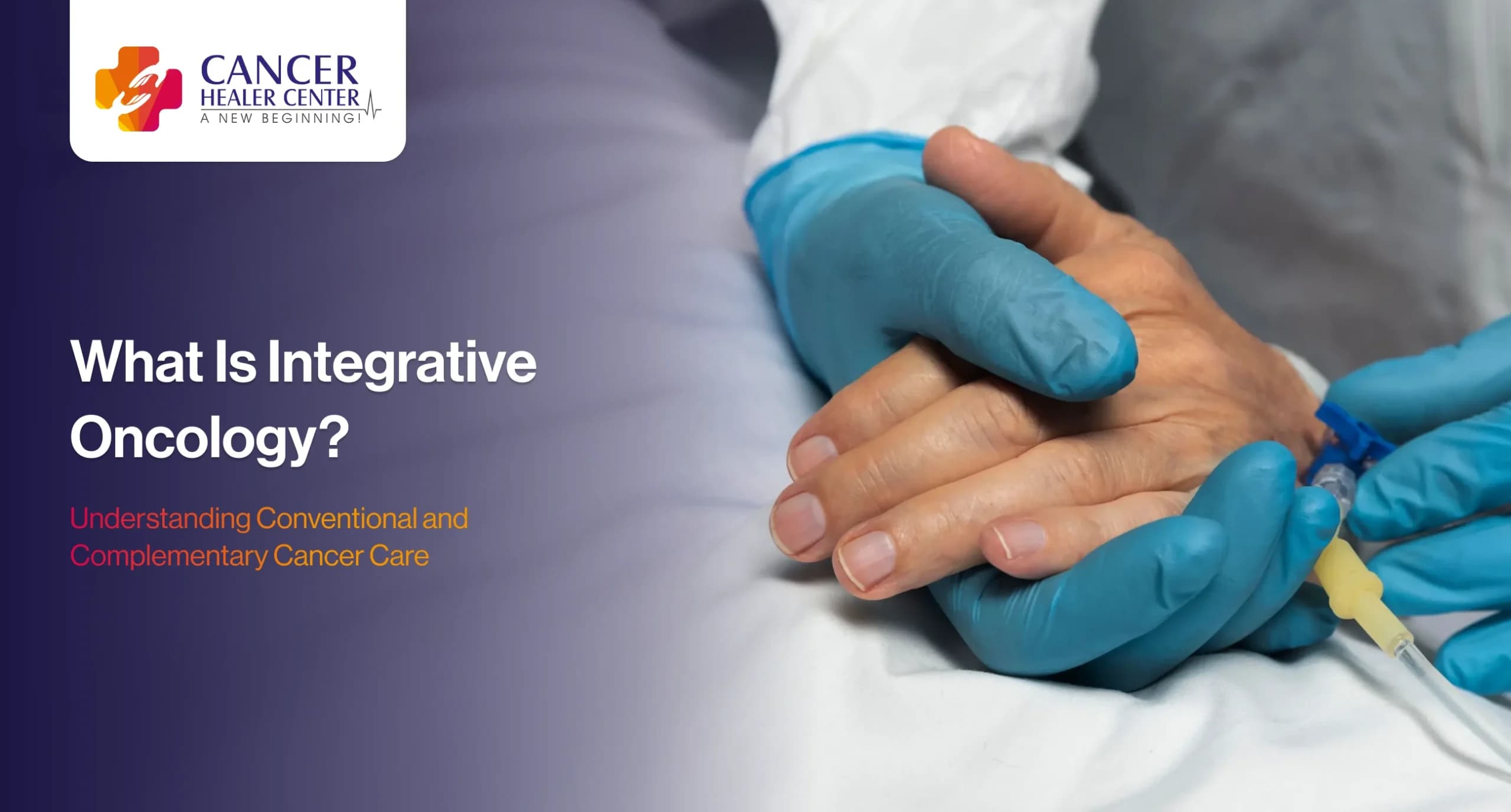
Integrative oncology brings conventional cancer treatment and suitable complementary care together. The aim is to support your wider needs while you continue the cancer treatment recommended by your cancer care team.
Complementary care and alternative care are not the same. Understanding the difference can help you make informed decisions about your care.
What Is Integrative Oncology?
Integrative oncology is a patient-centred approach to cancer care. It combines conventional cancer treatment with selected complementary approaches.
Some complementary approaches may help with symptoms or other concerns during or after cancer treatment. What may be suitable for you depends on your health, your symptoms and the cancer treatment you are receiving.
Integrative oncology does not mean giving up conventional cancer treatment.
The goal is to choose supportive care that is safe, suitable for you and coordinated with your cancer care team.
What Is Conventional Cancer Treatment?
Cancer treatment is different for each person. Your cancer doctor may recommend surgery, chemotherapy, radiation therapy, immunotherapy, targeted therapy, hormone therapy or another treatment based on your diagnosis and overall health.
What Is Complementary Cancer Care?
Complementary care is used together with standard cancer treatment.
Depending on your needs, complementary care may include:
- Acupuncture
- Meditation
- Mindfulness
- Yoga or suitable movement
- Massage
- Relaxation techniques
- Nutritional support
- Psychological support
- Lifestyle support
Some approaches may help with specific symptoms or supportive needs. Not every approach is suitable for every person.
Talk to your cancer care team before starting a complementary approach. Ask what it is intended to help with and whether it is suitable with your current treatment.
What Is Alternative Cancer Care?
Complementary care is used together with your cancer treatment. Alternative care is used instead of standard cancer treatment.
Do not stop or change your cancer treatment without talking to your cancer doctor.
How Does the Immune System Relate to Cancer?
Your immune system helps protect your body.
It includes different cells, tissues and signals that work together. Some immune cells can recognise and respond to abnormal cells.
Cancer can make this process more difficult. Some cancer cells can develop ways to avoid or reduce the body’s immune response.
This is why immunity is more complicated than simply being “strong” or “weak”.
Your immune response may also be affected by your cancer, general health and treatment.
What Is Cancer Immunotherapy?
Cancer immunotherapy includes different treatments that help the immune system respond to cancer in different ways.
Immune checkpoint inhibitors block signals that can prevent immune cells from attacking cancer. Common checkpoint targets include PD-1, PD-L1 and CTLA-4.
T-cell therapies use immune cells called T cells. CAR T-cell therapy changes a patient’s T cells in a laboratory so they can recognise specific targets on cancer cells. TIL therapy uses T cells collected from a tumour, grows them in the laboratory and gives them back to the patient.
Some monoclonal antibodies work as immunotherapies. They can help the immune system recognise cancer cells or bring immune cells closer to cancer cells. Other monoclonal antibodies work mainly as targeted therapies.
Cancer treatment vaccines are given to people who already have cancer. They aim to help the immune system recognise and respond to cancer cells. They are different from vaccines used to prevent infections.
Immune system modulators change the body’s immune response against cancer. Examples include certain cytokines and BCG, which is used to treat some bladder cancers.
Not every type of immunotherapy is suitable for every person or every cancer. Your cancer doctor will consider your cancer type, stage, test results, previous treatments and overall health when deciding whether immunotherapy may be suitable for you.
What Can Integrative Oncology Help With?
People have different needs during cancer treatment.
Some people may need more help with physical symptoms. Others may need support with sleep, emotional wellbeing, nutrition or everyday activities.
Managing Symptoms and Treatment Side Effects
Cancer and cancer treatment may cause symptoms such as:
- Pain
- Tiredness
- Nausea
- Sleep problems
- Changes in appetite
- Difficulty with everyday activities
Some complementary approaches may help with certain symptoms.
Tell your cancer care team what symptoms you are experiencing. They can help you understand which forms of support may be suitable for you.
Supporting Emotional Wellbeing
Living with cancer can be stressful.
You may feel worried, sad, angry or overwhelmed. You may also have concerns about treatment, test results or the future.
Support may include counselling, psychological care, relaxation techniques, mindfulness or support groups.
Tell your healthcare team if emotional concerns are affecting your daily life.
Supporting Physical Activity and Daily Life
Cancer treatment can sometimes make everyday activities more difficult.
Suitable physical activity or rehabilitation may help some people maintain strength and daily function.
The right amount of activity depends on your health and treatment. Ask your healthcare team what is safe for you.
Supporting Nutrition
Your nutritional needs may change during cancer treatment.
Problems such as nausea, poor appetite, difficulty swallowing or weight loss can make eating difficult.
If you are having problems eating or maintaining your weight, tell your healthcare team. Your doctor or an appropriately qualified dietitian can advise you according to your individual needs.
Be cautious about restrictive diets or products that claim to treat or cure cancer.
What Should I Know About Supplements During Cancer Treatment?
Some people use vitamins, supplements or other complementary products during cancer treatment.
These products may not be suitable for everyone. Some may affect medicines or cancer treatments.
Tell your cancer care team about any supplements or complementary products you use or are thinking about using.
You can ask:
- Why am I taking this?
- Is it suitable for me?
- Could it affect my cancer treatment?
- Are there any known risks?
- Should I stop using it before surgery or another treatment?
Do not assume that a product is safe simply because it is described as “natural”.
Why Does Evidence Matter?
Evidence helps guide how complementary care is used during cancer treatment. Different approaches may be considered for different needs, so it is important to understand why an approach is being recommended and how it fits with your current treatment.
Before starting complementary care, you can ask:
- What is this approach intended to support?
- Why is it being considered for me?
- How does it fit with my current cancer treatment?
- Are there any precautions I should know about?
- How will my progress and changing needs be reviewed?
How Does Cancer Healer Therapy (CAM) Fit Into Integrative Cancer Care?
At Cancer Healer Center (CAM), Cancer Healer Therapy (CAM) is an immune-focused, individualised supportive approach.
Cancer Healer Therapy (CAM) works through the immune system. The approach is considered according to your diagnosis, stage of cancer, previous treatment, current treatment, medicines, medical reports, general health and care needs.
Every person’s cancer journey is different. Your needs may also change during treatment. For this reason, your medical situation and care needs can be reviewed as your cancer journey changes.
Cancer Healer Therapy (CAM) is different from conventional cancer immunotherapy.
Conventional immunotherapy uses specific medicines or cell based treatments to help the immune system respond to cancer. Cancer Healer Therapy (CAM) follows a different, immune-focused supportive approach.
Cancer Healer Therapy (CAM) is used together with your cancer treatment.
Do not stop or change your cancer treatment without talking to your cancer doctor.
Why Communication With Your Cancer Care Team Matters
Your cancer doctor needs to know about the different treatments, medicines, supplements, complementary products and complementary care you use.
This information helps your healthcare team understand your care as a whole.
It may also help them identify something that could affect your cancer treatment.
Tell your cancer care team before starting something new. This can be especially important before surgery or while you are receiving cancer treatment.
Keep your cancer care team informed about the different types of care you receive.
If you are thinking about changing your cancer treatment, speak to your cancer doctor first.
Considering Integrative Support During Cancer Treatment?
If you are considering integrative supportive care, speak with your cancer care team.
At Cancer Healer Center (CAM), you can discuss your diagnosis, current treatment, medical history, medicines, symptoms and care needs.
Bring your recent medical reports, scan and pathology reports where available, details of your current and previous cancer treatments, and a list of your medicines and supplements.
This information can help the healthcare professional understand your current care before discussing whether an individualised supportive approach may be suitable for you.
References
- National Cancer Institute. Definition of Integrative Medicine. NCI Dictionary of Cancer Terms, National Institutes of Health.
- National Cancer Institute. Complementary and Alternative Medicine (CAM). National Institutes of Health.
- National Cancer Institute. Immunotherapy to Treat Cancer. National Institutes of Health.
- National Center for Complementary and Integrative Health. Cancer and Complementary Health Approaches: What You Need to Know. National Institutes of Health.
- Society for Integrative Oncology. Practice Guidelines.
- Mao JJ, Ismaila N, Bao T, et al. Integrative Medicine for Pain Management in Oncology: Society for Integrative Oncology-ASCO Guideline. Journal of Clinical Oncology. 2022;40(34):3998-4024.
- Gowin K, Ahn ER, Lopez AM. Synthesis and Educational Overview of the ASCO-Society of Integrative Oncology Guidelines: On the Path to Implementation. ASCO Educational Book. 2025.
Frequently Asked Questions
Integrative oncology combines conventional cancer treatment with suitable complementary care. Complementary care may be used for specific supportive needs while your cancer treatment continues.
Complementary care is used together with standard cancer treatment. Alternative care is used instead of standard cancer treatment.
Do not stop or change your cancer treatment without talking to your cancer doctor.
No. Cancer immunotherapy is a medical cancer treatment that uses specific medicines or cell based treatments to help the immune system respond to cancer.
Cancer Healer Therapy (CAM) is a different, immune-focused supportive approach.
Cancer Healer Therapy (CAM) is an immune-focused, individualised supportive approach used at Cancer Healer Center (CAM). It works through the immune system and is considered according to your diagnosis, treatment history, current health and care needs.
Cancer Healer Therapy (CAM) is used together with your cancer treatment. Whether it may be suitable for you depends on your diagnosis, current treatment, medicines, medical reports and overall health.
Tell your cancer care team about any complementary care you use or are considering.
No. Do not stop or change your cancer treatment without talking to your cancer doctor.
Cancer Healer Therapy (CAM) is used together with your cancer treatment.
Some complementary products may affect medicines or cancer treatments.
Tell your cancer care team about any supplements or complementary products you use or are thinking about using.
Ask what the approach is meant to help with, whether it is suitable for you, what evidence supports it and whether there are any known risks.
Also ask whether it could affect your current cancer treatment.
Bring your diagnosis, recent medical reports, scan and pathology reports where available, details of your previous and current cancer treatments, and a list of the medicines and supplements you take.