

A Stage 4 cancer diagnosis, also called metastatic cancer, changes everything in an instant. Traditionally, reaching Stage 4 meant the cancer had spread beyond its original site to distant organs or tissues, making complete removal difficult, if not impossible.
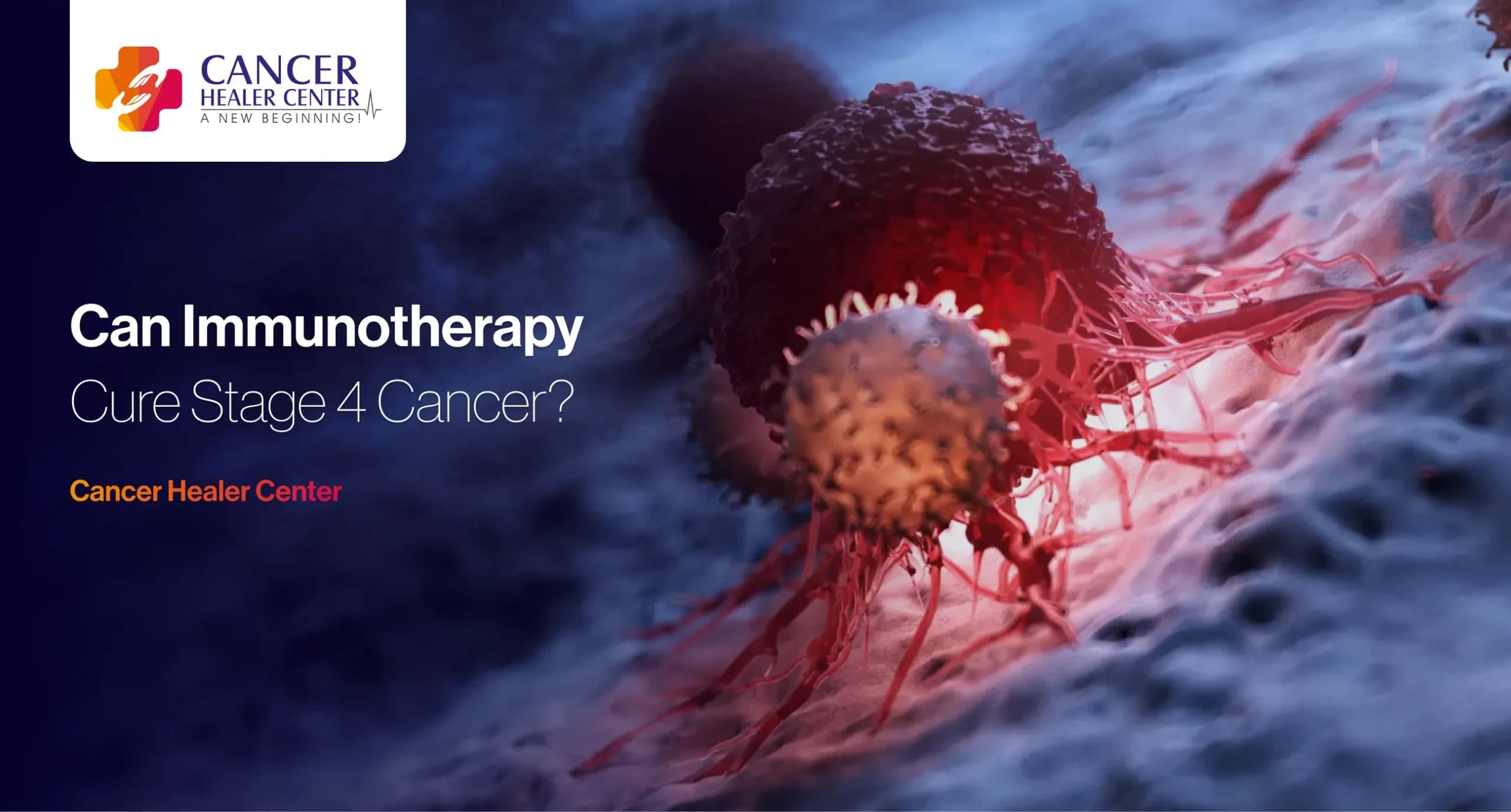
However, the way oncologists approach advanced-stage disease has shifted considerably. Immunotherapy has opened up treatment possibilities that simply didn’t exist a generation ago, and it’s led many patients and families to ask one central question: can immunotherapy cure stage 4 cancer?
Getting clarity on what immunotherapy can realistically achieve at an advanced stage, understanding the difference between a full cure and long-term remission, and knowing how integrative care fits into the picture can make this treatment journey slightly easier to navigate.
Defining Stage 4 Cancer and the Goal of Immunotherapy
To understand what immunotherapy for stage 4 cancer can offer, it helps to look at how metastatic disease behaves and how immunotherapy steps in.
Stage 4 cancer means the disease has spread through the bloodstream or lymphatic system to other parts of the body, such as the lungs, liver, bones, or brain.
Traditional chemotherapy attacks fast-dividing cells throughout the body without much discrimination. Immunotherapy takes a different route. It trains and strengthens the patient’s own immune system so it can identify, target, and eliminate cancer cells on its own. For metastatic disease, treatment is generally aimed at achieving a durable response or complete remission, a state where no clinical signs of active cancer remain, letting patients maintain a good quality of life for extended periods.
Is It a “Cure” or “Long-Term Remission”?
In clinical oncology, doctors use the word “cure” with precaution. Since microscopic cancer cells can potentially stay dormant somewhere in the body, medical professionals tend to speak in terms of remission and progression-free survival instead.
| Outcome Metric | What It Means | The Role of Immunotherapy |
|---|---|---|
| Complete Remission | No detectable tumors or active cancer cells on scans or diagnostic tests | Immunotherapy can bring about long-lasting remission in select patients whose tumors respond strongly |
| Durable Response | The immune system keeps ongoing control over remaining cancer cells, stopping new growth | Immune memory allows T-cells to keep recognizing and fighting cancer long after active treatment ends |
| Disease Control | Tumors shrink or stop growing, stabilizing advanced-stage disease | Helps turn Stage 4 cancer into a manageable, chronic condition for many patients |
Immunotherapy doesn’t promise a guaranteed cure for every patient. Still, a meaningful group of Stage 4 patients, particularly those with advanced melanoma, high-PD-L1 non-small cell lung cancer, and certain blood cancers, may go on to achieve sustained remissions lasting years, outcomes that simply weren’t possible with older treatment approaches.
Factors Influencing Immunotherapy Success in Advanced Cancer
How well immunotherapy performs against Stage 4 cancer comes down to a few key biological and physiological factors:
- Biomarker expression: Tumors that express specific markers, such as high PD-L1 levels or Microsatellite Instability � High status tends to respond better to checkpoint inhibitors.
- Tumour microenvironment: “Hot” tumours, meaning those with heavy immune cell infiltration, respond more favourably than “cold” tumours that actively suppress immune activity.
- Overall immune health: A patient’s baseline immune strength plays a major role. Patients whose immune systems are resilient tend to mount a stronger defence once treatment clears the path.
This is also relevant when looking at immunotherapy for stage 4 breast cancer, where biomarker status and overall immune function often shape how well a patient responds to treatment.
The Role of Supportive and Integrative Care: Cancer Healer Center
Managing stage 4 cancer calls for supporting the patient’s strength and biological resilience throughout treatment. The Cancer Healer Center, led by Dr. Tarang Krishna, specialises in Cancer Healer Therapy (CAM), an integrative protocol built around core immunotherapy principles. The approach focuses on strengthening the body’s natural defences to help fight disease while easing the overall strain treatment places on the body.
With locations across major healthcare centers in India, including Mumbai (Juhu, Parel, Thane), Delhi, Bangalore, Chandigarh, Ahmedabad, and Indore, the center’s work focuses on:
- Immune modulation: Training and strengthening white blood cells to consistently identify and target abnormal cells throughout the body.
- Symptom management and quality of life: Supporting organ function, reducing treatment-related fatigue, and protecting overall well-being throughout advanced care.
- Integrative support: Designed to work alongside conventional treatment and serve as a personalised care plan focused on long-term disease management.
Questions to Ask Your Oncologist Before Starting Immunotherapy
Going into a treatment conversation prepared can make a real difference in feeling confident about the path ahead. A few key questions to bring to your next appointment:
- Can my cancer be a candidate for immunotherapy?Not every tumour type or stage responds the same way, so it helps to understand why this treatment is being recommended for your specific case.
- What biomarker tests have been done, and what did they show?Results like PD-L1 expression or microsatellite instability status can shape how well immunotherapy is likely to work.
- What outcome are we aiming for: remission, disease control, or something else?Knowing the realistic goal helps set expectations from the start.
- What side effects should I watch for, and when should I call you?Immune-related side effects can show up in unexpected ways, so it’s worth knowing the warning signs early.
- How will we know if the treatment is working?Ask about the scan schedule, bloodwork, and how pseudoprogression will be handled if it comes up.
- Can this be combined with other treatments or integrative support?Some patients pair immunotherapy with chemotherapy, radiation, or supportive care, so it’s worth understanding what fits your situation.
- What happens if this treatment doesn’t work as expected?Having a sense of backup options in advance can ease some of the uncertainty.
- How will treatment affect my daily life?From energy levels to appointment frequency, understanding the practical side helps with planning ahead.
Bringing a written list of questions, and maybe a family member to help take notes, may make these conversations feel less overwhelming and easier to revisit later.
Conclusion
Can immunotherapy cure stage 4 cancer? Medical science stops short of promising a universal cure, but immunotherapy has genuinely reshaped how advanced cancer is managed. It may offer a real path toward long-term remission, extended survival, and a better quality of life along the way.
For patients and families facing an advanced diagnosis, talking through personalised immunotherapy for stage 4 cancer options and integrative support with an oncology team, like the one at Cancer Healer Center may offer a clear, evidence-based way forward.
Frequently Asked Questions
Sometimes. It can shrink tumours or lead to long-term remission in certain cancers, though results vary by type and biomarkers.
Yes, some achieve long-term remission or disease control, especially with immunotherapy advances. Outcomes vary by cancer type and overall health.
Most plans combine immunotherapy, targeted therapy, chemo, radiation, or surgery, along with immune-supportive care, tailored by an oncologist.
It depends on the cancer type and treatment goals. For some it extends quality time; for others, immunotherapy along with chemotherapy may be a better fit.
It varies widely by cancer type, spread, and treatment response. Some patients live for years with newer treatments like immunotherapy.